Vitamin B6 (Pyridoxal-5-Phosphate)
The Active Form of Vitamin B6
The biologically active coenzyme form of vitamin B6, essential for amino acid metabolism, neurotransmitter synthesis, and energy production.
What is Vitamin B6 (P5P) Good For?
Vitamin B6 is vital for over 150 biochemical reactions in the body, particularly those involved in protein metabolism, neurotransmitter production, and red blood cell formation.
Supplementing with P5P, the active coenzyme form, bypasses conversion steps required by pyridoxine, making it especially useful for individuals with impaired vitamin B6 metabolism.
Vitamin B6 (P5P) supplementation may lead to:
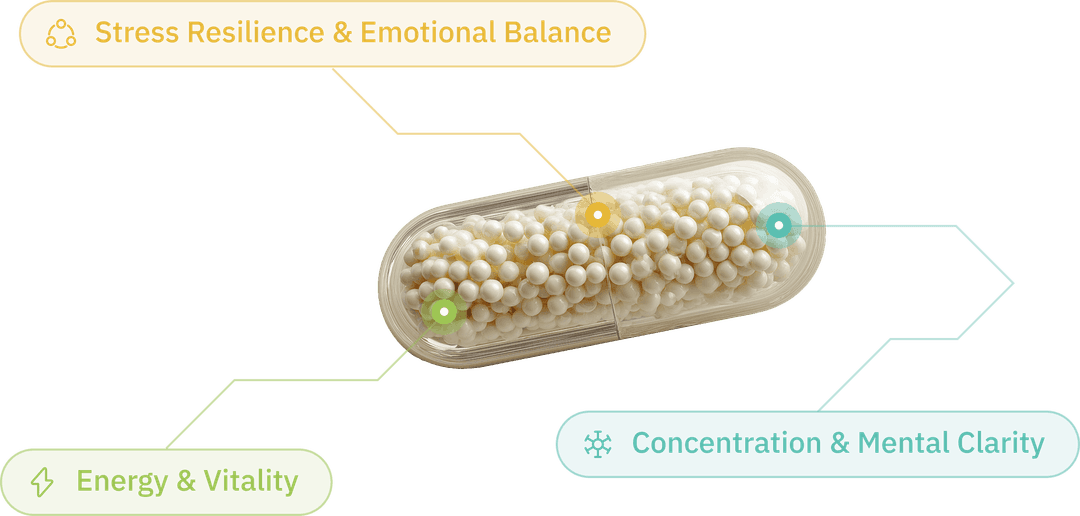
Enhanced energy production and reduction of fatigue
Enhanced neurotransmitter synthesis (serotonin, dopamine, gamma amino-butyric acid (GABA)) that can enhance mood
Hormonal regulation by acting as a cofactor
Lowered cardiovascular risks by decreasing homocysteine levels
Improved red blood cell formation and oxygen transport
Improved immune system through production of T lymphocytes and interleukins

What is Vitamin B6?
Vitamin B6 refers to a group of related compounds (pyridoxine, pyridoxal, pyridoxamine) that must be converted into P5P (pyridoxal-5-phosphate) to become biologically active.
Using P5P directly ensures immediate activity in enzymatic pathways, supporting neurological functions, mood, and cardiovascular health.

What is the Recommended Daily Dose of Vitamin B6 (P5P)?
The EU NRV for vitamin B6 is 1.4 mg per day, sufficient to cover normal adult requirements for energy metabolism, neurotransmission, and blood health.

Things to Know

Source
P5P (coenzyme form of vitamin B6), available through advanced synthesis

Technology
Bioactive form eliminates reliance on enzymatic conversion of pyridoxine

Region
Globally recognised essential vitamin with harmonised NRVs

Data
Supported by EFSA and clinical research on B6 status for nervous system, red blood cell formation and immune system
Vitamin B6 (P5P) in Detail
1.4 mg (EU NRV)
Pyridoxal-5-phosphate (active form of vitamin B6)
Delivered as coenzyme-active P5P for immediate metabolic use
- Provides vitamin B6 in its active coenzyme form
- Reduces fatigue and supports normal energy metabolism
- Lowers homocysteine levels alongside folate and B12
- Improves mood through neurotransmitter synthesis
- Supports immunity, hormonal balance, and blood health
Decades of research confirm vitamin B6’s essential role; P5P is the most efficient and active form
Your Questions About Vitamin B6 (P5P)
What is Vitamin B6 (P5P)?
keyboard_arrow_downWhat are the benefits of Vitamin B6 (P5P)?
keyboard_arrow_downHow is P5P different from pyridoxine?
keyboard_arrow_downAre there any side effects of Vitamin B6?
keyboard_arrow_downCan Vitamin B6 (P5P) be combined with other B vitamins?
keyboard_arrow_downDiscover your formula of ingredients
No two people are the same. That’s why your formula is uniquely yours. We select the most effective ingredients based on your health data, lifestyle, and goals — ensuring your capsules are both efficient and safe.
References
The Science That Supports Us
Cognitive and Neurological Support
Field, D.T. et al. (2022) ‘High‐dose vitamin B6 supplementation reduces anxiety and strengthens visual surround suppression’, Human Psychopharmacology: Clinical and Experimental, 37(6). doi:10.1002/hup.2852.
Mental Health
Girgis, V. et al. (2025) ‘Moderate pyridoxal phosphate deficiency enhances neuronal excitability and promotes calcium dysregulation’, Frontiers in Neuroscience, 19. doi:10.3389/fnins.2025.1621349.
Nerve Repair
Naviaux, R.K. et al. (2016) ‘Metabolic features of chronic fatigue syndrome’, Proceedings of the National Academy of Sciences, 113(37). doi:10.1073/pnas.1607571113.
Immune System Support
Parra, M., Stahl, S. and Hellmann, H. (2018) ‘Vitamin B6 and its role in cell metabolism and physiology’, Cells, 7(7), p. 84. doi:10.3390/cells7070084.
Immune System Support
Stach, K., Stach, W. and Augoff, K. (2021) ‘Vitamin B6 in health and disease’, Nutrients, 13(9), p. 3229. doi:10.3390/nu13093229.
Immune System Support
EFSA Panel on Dietetic Products (2009)‘Scientific opinion on the substantiation of health claims related to vitamin B6 and protein and glycogen metabolism (ID 65, 70, 71), function of the nervous system (ID 66), Red Blood Cell Formation (ID 67, 72, 186), function of the immune system (ID 68)’, (2009) EFSA Journal, 7(10), p. 1225. doi:10.2903/j.efsa.2009.1225.