Riboflavin (Vitamin B2)
The Cellular Energy & Vision Vitamin
An essential water-soluble B vitamin that plays a role in energy production, improves vision and skin while contributing to lowered oxidative stress and inflammation.
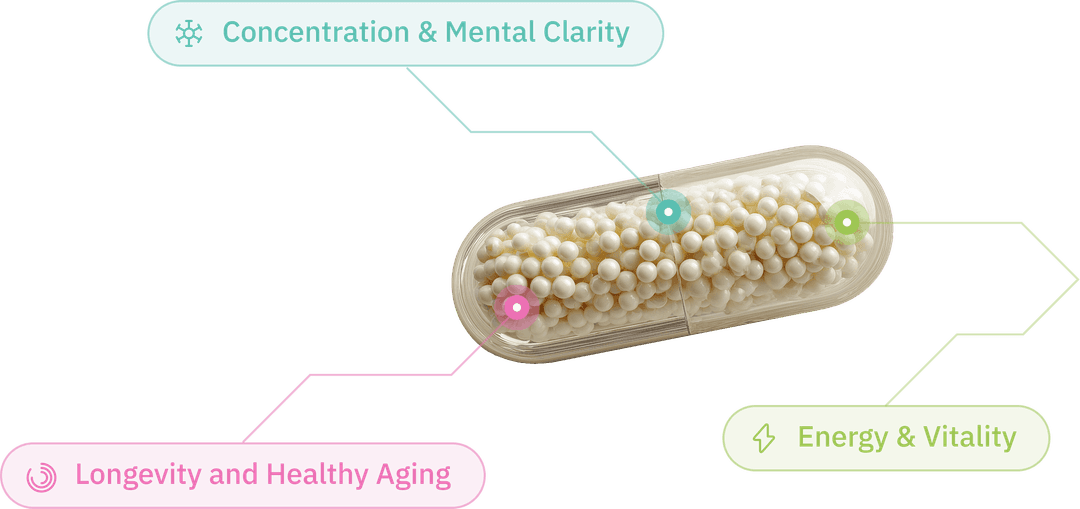
What is Riboflavin Good For?
Riboflavin is an essential cofactor in the oxidative metabolism of carbohydrates, fats, and proteins, supporting ATP production. It also contributes to the maintenance of normal vision and skin, while playing a role in protecting cells against oxidative stress.
Riboflavin supplementation may lead to:
- Energy production through mitochondrial pathways
- Enhanced exercise performance and reduced exercise-induced fatigue
- Maintenance of eye health, especially the retina by enhancing flavin levels
- Reduction in oxidative stress and inflammatory markers (e.g. interleukin-2 and c-reactive protein)
- Reduced risk of skin inflammatory conditions (e.g. cheilosis)
- Adequate early-life development

What is Riboflavin?
Riboflavin is a B vitamin found in foods such as dairy, eggs, leafy greens, and fortified cereals. It acts as a precursor to flavin mononucleotide (FMN) and flavin adenine dinucleotide (FAD), essential cofactors in energy metabolism and antioxidant enzyme activity (including glutathione reductase).
As a water-soluble vitamin, riboflavin is not stored in large amounts and requires daily intake.

What is the Recommended Daily Dose of Riboflavin?
The EU NRV (Nutrient Reference Value) for riboflavin is 1.4 mg per day, sufficient to meet daily intake for normal growth and biological functions.

Things to Know

Source
Found naturally in foods and available as riboflavin or riboflavin-5’-phosphate (active coenzyme form)

Technology
Active coenzyme form (R-5’-P) offers higher bioavailability in certain individuals

Region
Globally recognised essential nutrient with established NRV values

Data
Supported by EFSA and WHO evaluations on energy, eye and early-life development
Riboflavin in Detail
1.4 mg (EU NRV)
Vitamin B2 (riboflavin or riboflavin-5’-phosphate)
Standard and coenzyme forms available; water-soluble and easily excreted when intake exceeds needs
- Meets 100% of EU NRV at 1.4 mg
- Contributes to energy production
- Maintains healthy eyes, skin, and mucous membranes
- Protects cells through reduced oxidative stress
- Enhances physical performance and reduces tiredness
Long-established essential nutrient with proven benefits in energy metabolism and antioxidant protection
Your Questions About Riboflavin
What is Riboflavin?
keyboard_arrow_downWhat are the benefits of Riboflavin?
keyboard_arrow_downHow is Riboflavin different from other B vitamins?
keyboard_arrow_downAre there any side effects of Riboflavin?
keyboard_arrow_downCan Riboflavin be combined with other B vitamins?
keyboard_arrow_downDiscover your formula of ingredients
No two people are the same. That’s why your formula is uniquely yours. We select the most effective ingredients based on your health data, lifestyle, and goals — ensuring your capsules are both efficient and safe.
References
The Science That Supports Us
Cognitive and Neurological Support
Balasubramaniam, S. and Yaplito-Lee, J. (2020) ‘Riboflavin metabolism: Role in mitochondrial function’, Journal of Translational Genetics and Genomics [Preprint]. doi:10.20517/jtgg.2020.34.
Mental Health
Hoffman, M.D. et al. (2017) ‘A placebo-controlled trial of riboflavin for enhancement of ultramarathon recovery’, Sports Medicine - Open, 3(1). doi:10.1186/s40798-017-0081-4.
Nerve Repair
Powers, H.J. (2003) ‘Riboflavin (Vitamin B-2) and health’, The American Journal of Clinical Nutrition, 77(6), pp. 1352–1360. doi:10.1093/ajcn/77.6.1352.
Immune System Support
von Martels, J.Z. et al. (2019) ‘Riboflavin supplementation in patients with crohn’s disease [the rise-up study]’, Journal of Crohn’s and Colitis, 14(5), pp. 595–607. doi:10.1093/ecco-jcc/jjz208.